Russian Tortoise 4"
- Shipping:
- Calculated at Checkout
Common Name: Russians Tortoise
Scientific Name: Agrionemys Horsfieldii (also testudo horsfieldii)
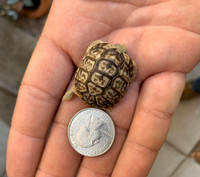
Current Size: 4-5" range
Average Adult Size: 6-8" (females larger)
Area of Origin: Several countries between Eastern Europe and Western China
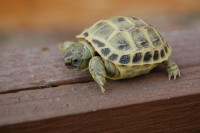
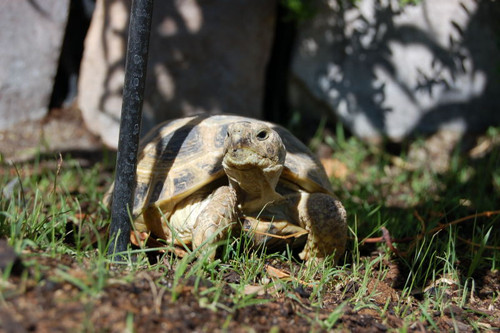
Description: Light brown and olive color with dark brown bands around each scute of the shell. These tortoises are probably the most "different" of the Testudo type tortoises. They are almost completely rounded when viewed from above, which probably is to help them spin around when underground in burrows. They tend to be somewhat flattened on top, without much of a "dome." These are a fun, active species that is commonly kept and enjoyed as pets.
Natural Habitat: Mediterranean tortoises, these animals live in meadows and scrubland where they come and go from their hides in order to maintain the ideal temperatures. They do brumate/hibernate naturally, and will brumate in captivity if those proper conditions are given. As adults, they can safely handle body temperatures as low as 35 degrees during hibernation, and on cold spring or fall days, they will retreat underground to maintain some warmth. Summer highs up to 110 degrees can be tolerated as long as there is a cooler, underground, or damp retreat the tortoise can get into. In hot climates, they will spend much of the summer days in hide areas or simply buried under an inch or two of earth aestivating to conserve energy and resources.
Natural Diet: This tortoise is naturally a browser, eating broadleaf weeds and low leaves from bushes and shrubs. Their natural diet is very high in fiber and low in proteins and sugars. Some individuals will eat grass while others prefer not to.
Adult Behavior: Adult tortoises are active, busy tortoises when the temperatures are in their ideal ranges (60-85 degrees). They can be somewhat aggressive towards each other particularly during breeding season (spring), but usually can be kept in small groups without any major problems, particularly animals that have been raised in groups. Most will eagerly come to their keepers looking for food once they are comfortable in their environments. They can be good climbers and will make attempts to escape, so perimeter fences should be buried at least 6-12" underground, and sidewalls 12-16" above ground will normally contain them. Constant attempts to escape can sometimes be corrected by enlarging the enclosure and adding visual barriers within it (logs, boulders, more plants, etc).
*These tortoises were originally imported to the United States. They are pretty and eating well and active, but should be quarantined from other collections for some time just to be safe.
26 Reviews Hide Reviews Show Reviews
-
Just got my Tortoise!!
I can't believe it! I finally purchased a tortoise!! He came in the mail two days later in great condition! I love him! He's perfect! This is totally a great place to get tortoises, and if I try to buy more, I'm getting them from here!
-
A wonderful, healthy, good tempered tortoise
I just have to say what an amazing animal I received. Despite cold weather on the East Coast (I had to wait for a night when it wasn't expected to dip below 20), our new tortoise arrived warm, well packed and none the worse for wear. After a week or two adjusting to his new home (he spent most of that time burrowed, only comimg out for food), he is now amazingly active and very social for a tortoise. He has a great shell and has obviously been well cared for before arriving in our home. If we ever decide to expand our reptile family, we will certainly order from you again.
Related Products